How to Properly Store & Dry Your 3D Printing Filaments
Moisture is the #1 enemy of clean 3D prints. Learn simple, effective habits to dry spools, eliminate stringing, and prevent print failure.
1. Identifying Moisture in Your Filament
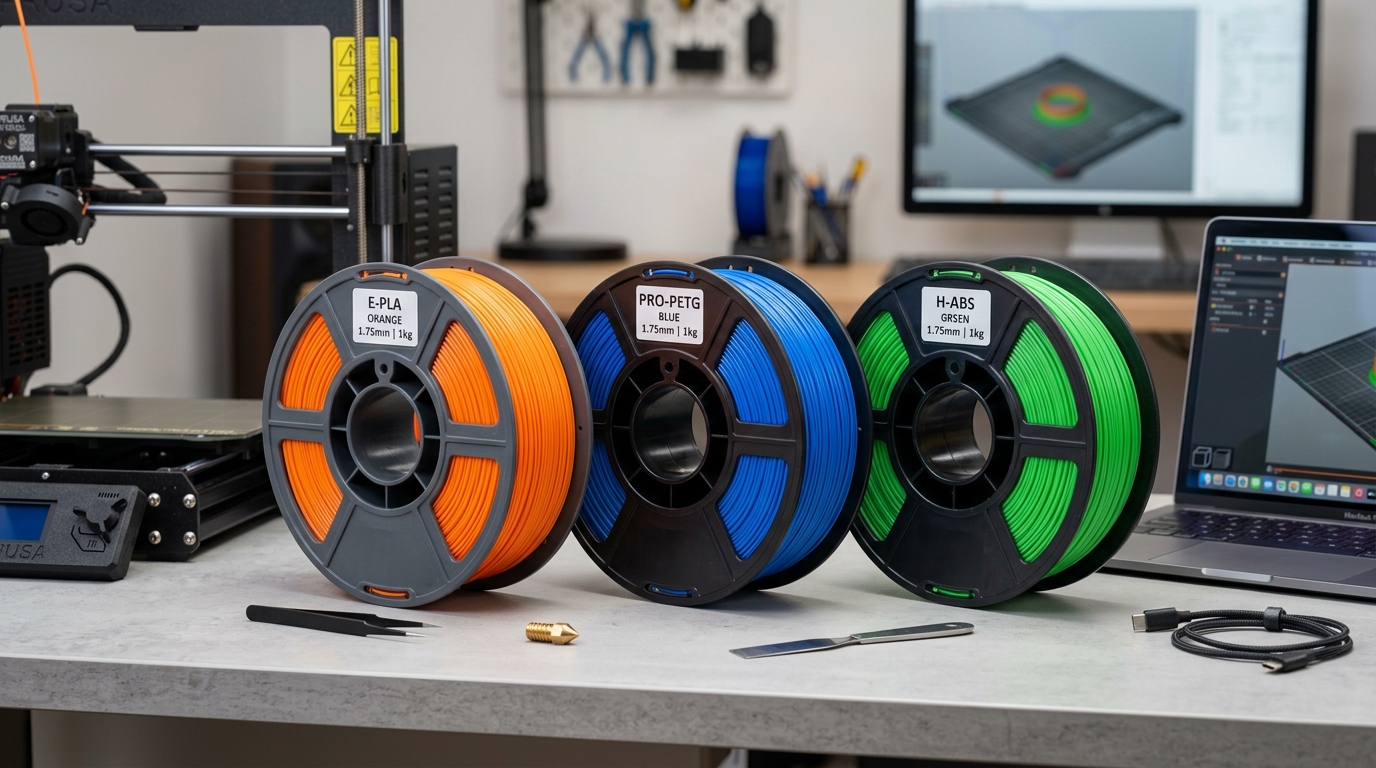
Hygroscopic materials like PLA, PETG, and ABS absorb moisture directly from ambient air humidity. Common symptoms of wet filament include audible popping or crackling noises during extrusion, heavy stringing, excessive oozing, rough surface finish, and brittle layer adhesion.
2. Drying Temperatures and Durations
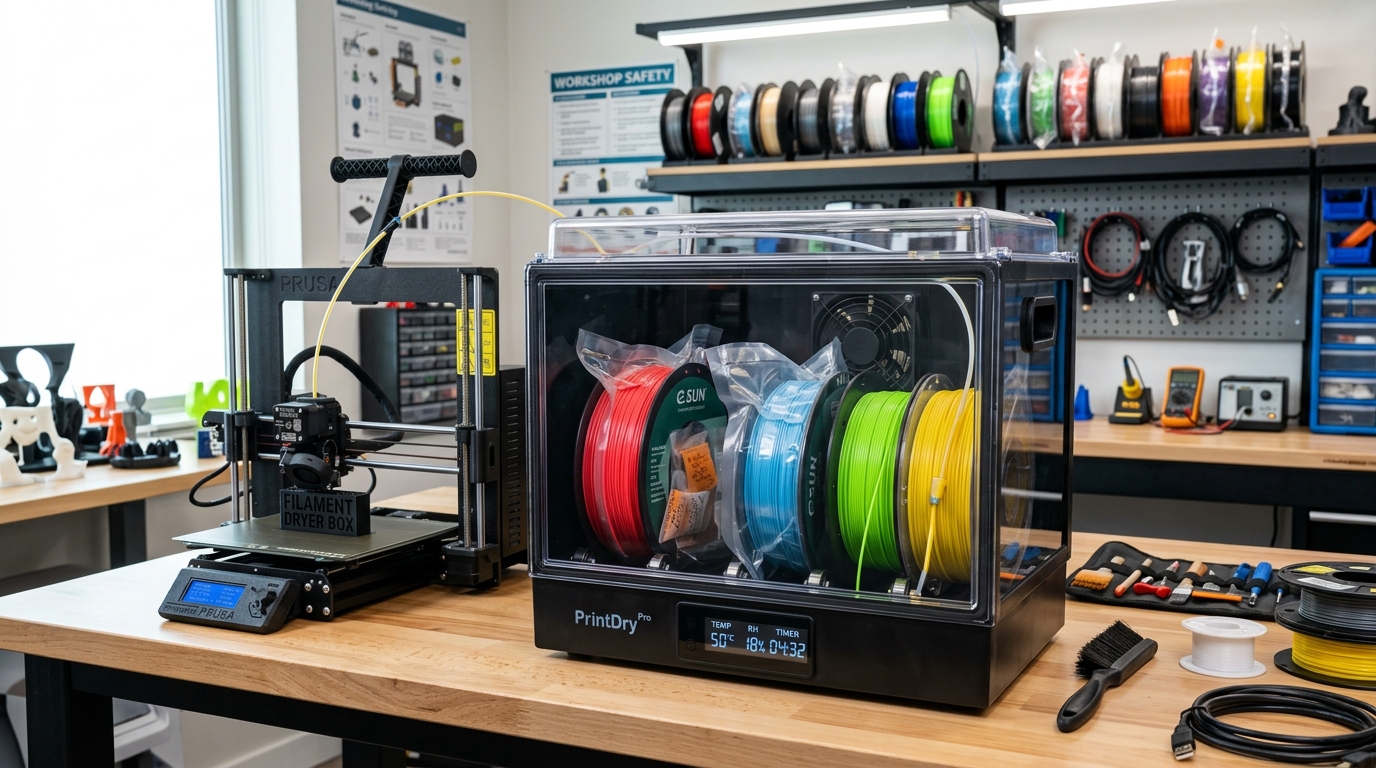
Using a dedicated filament dryer or food dehydrator is the safest way to restore damp spools. PLA requires 45°C for 4 to 6 hours; PETG needs 60°C–65°C for 6 hours; ABS and Nylon require 70°C+ for 8 hours. Never exceed the glass transition temperature of the plastic, as this will fuse the filament turns together.
3. Long-Term Dry Box & Storage Best Practices
Store unused spools in airtight vacuum seal bags or sealed dry storage containers packed with active silica gel desiccant packs. Aim to maintain internal container humidity below 15% RH. Installing a digital hygrometer on your storage bin lets you know exactly when to recharge silica gel beads.
| Material | Drying Temp | Drying Duration | Target Storage RH |
|---|---|---|---|
| PLA | 45°C - 50°C | 4 - 6 Hours | < 20% |
| PETG | 60°C - 65°C | 6 Hours | < 15% |
| ABS | 65°C - 70°C | 6 - 8 Hours | < 15% |
Key Takeaway
Keeping your spools dry ensures smooth surface finishes, tight dimensional tolerances, and bubble-free extrusions on every print job.